
DemonstrationNot an official government system

Every tonne counted once, from the facility meter to Iraq’s national report.

Iraq Digital MRV is a working demonstration of a proposed system for monitoring, reporting and verifying greenhouse-gas emissions across Federal Iraq and the Kurdistan Region. Each authority keeps custody of its own data. The nation keeps one record.

Access is by invitation from the presenting team.

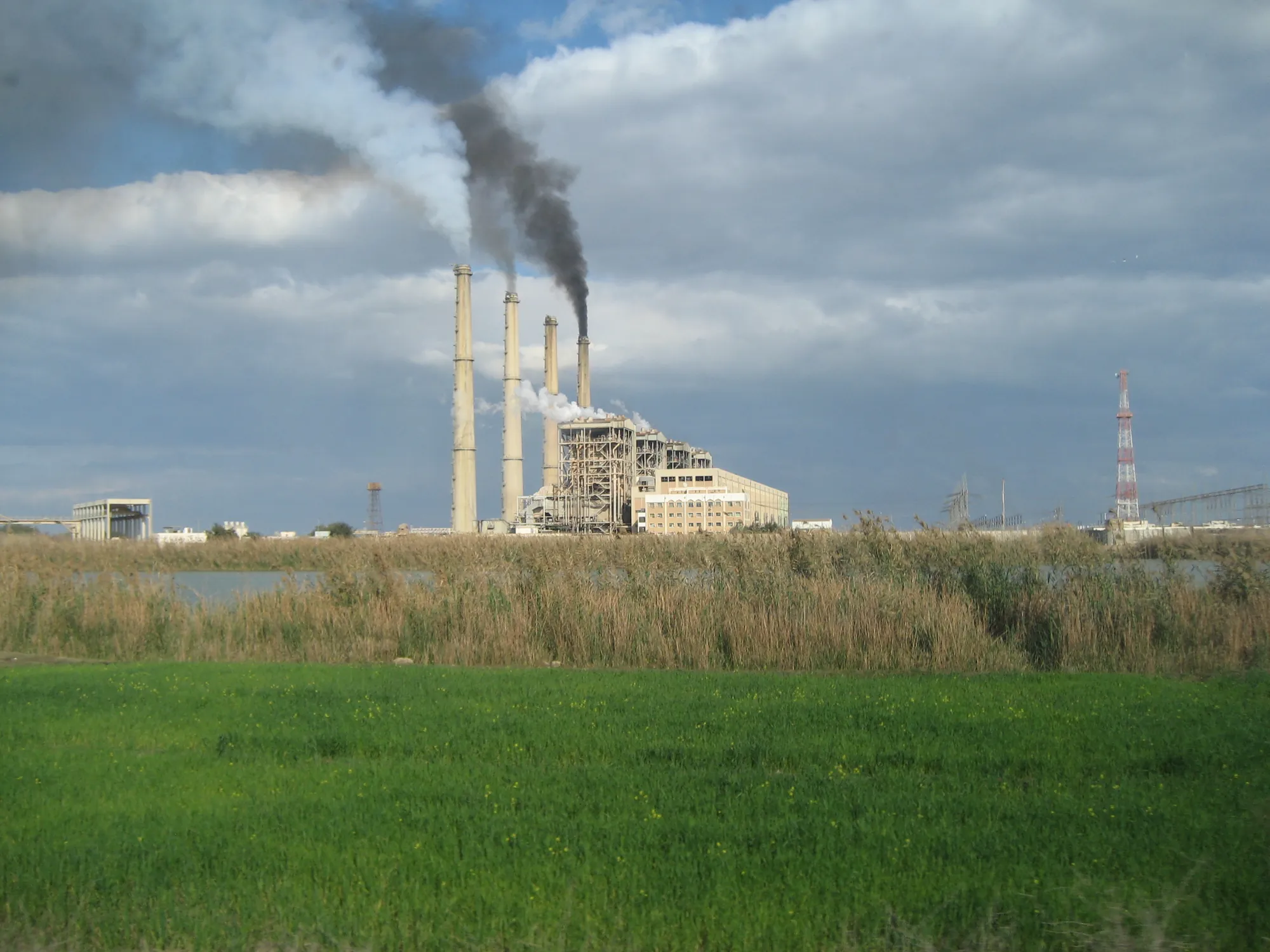
Thermal power station chimneys releasing smoke beyond reed beds and green fields in Iraq
Example recordExample

Gas-fired power station, Erbil Governorate

October 2026

41,280tonnes CO₂e

IRQ-FAC-0001 · R1

Record trail
  1. Fuel meter read and evidence attached
  2. Calculated with versioned factors
  3. Approved by the KRG Regional Node
  4. Accepted into the national record

Counted once in the national total

Why Iraq needs this now

Under the Paris Agreement, Iraq reports its emissions every two years, and those reports are reviewed by international experts. The figures have to come from somewhere: power stations, refineries, oil and gas fields and cement plants under two administrations, measured the same way and added up once.

A boat crossing open water in the Chibayish marshes under a hazy rising sun
  • Transparency reports are due on a fixed cycle

    The Enhanced Transparency Framework asks for a national inventory, NDC progress and Article 6 information in each Biennial Transparency Report, with data a technical expert review can trace to its source.

  • One inventory, two administrations

    Federal ministries and the Kurdistan Regional Government each oversee their own facilities. The national inventory needs both, without either side giving up control of its data.

  • Nothing counted twice, nothing lost

    When a figure passes through several offices it can be entered twice, or not at all. A national system has to know which version is the one that counts.

  • Article 6 depends on a clean trail

    Transferring emission reductions abroad needs national authorisation, corresponding adjustments and a record that buyers and UN reviewers can audit.

  • Exports now meet the EU carbon border

    The EU’s Carbon Border Adjustment Mechanism prices the carbon in imported cement, steel, aluminium and fertilisers. Exporters need verified product data, kept separate from the national inventory.

How it works

Data moves up through the people responsible for it. At each level it is checked, approved and handed on as a signed, versioned package. Nobody retypes it, and nobody above can quietly change it.

  1. The facility measures

    A power station, refinery, field or cement plant records fuel use, production and flaring under an approved monitoring plan, with meter readings and evidence attached.

  2. Its own authority reviews

    Quality checks run automatically. Then the responsible reviewers approve the report before it moves on.

    KRG Regional Node

    Reviews and approves Kurdistan Region facilities, and keeps the regional source record.

    Federal sector nodes

    Review and approve federal facilities, sector by sector.

  3. The National Hub reconciles

    Signed packages arrive at the National MRV Hub, which checks them against national methods and can query, reject or accept them. It never edits regional data.

  4. One canonical record

    Each facility and period has exactly one nationally accepted record, with a persistent national ID and a trail back to the meter reading.

  5. Iraq reports

    Accepted records feed the National Inventory Report, the Biennial Transparency Report and NDC tracking.

Independent verification runs alongside

Verifiers sit outside the approval chain. They sample evidence, test calculations and give an opinion on facility and national figures, but cannot approve or edit them.

Show the detailed architecture diagram
FED

Federal facilities

Power · refining · oil & gas · cement

monitoring reports

Federal Sector Nodes

Sector review & approval

KRG

KRG facilities

Power · refining · oil & gas · cement

monitoring reports

KRG Regional Node

Regional QA/QC & approval

keeps regional source record

versioned packages

National MRV Hub

  • Canonical records
  • National reconciliation
  • NIR / BTR / NDC tracking
  • National Article 6 authority
assurance

Independent verification

Separate assurance lane — not part of approvals

The same design as a single diagram, as used in technical briefings.

Six commitments the software enforces

These are not policy statements. The server refuses anything that breaks them, and in the demo you are welcome to try.

  • One national record

    Each figure is accepted once, into a single canonical record with a persistent national ID. There are no parallel national accounts.

    Where to see it: National Hub and canonical records

  • Regional custody

    The Kurdistan Region keeps its regional source record and evidence. The nation receives what it needs to report, mapped to national IDs.

    Where to see it: KRG Regional Node

  • No double counting

    Every package is hashed and carries an idempotency key. Sending the same package twice returns the first acknowledgement and changes nothing.

    Where to see it: Scenario 3: idempotent resend

  • Sovereign Article 6

    Only the national Article 6 authority can authorise transfers or apply corresponding adjustments. Any other attempt is refused and logged.

    Where to see it: Scenario 5: Article 6 boundary

  • Independent verification

    Verifiers cannot approve or edit what they verify, and a verifier with a declared conflict of interest cannot be assigned.

    Where to see it: Scenario 6: independent assurance

  • A complete audit trail

    Submitted data is never overwritten. A correction creates a new revision, and every action, refusals included, is written to a hash-chained log anyone can check.

    Where to see it: Audit log and chain check

What you can try in the demo

Six guided scenarios run the real workflow on example data. On-screen guidance switches roles as the work changes hands, so you see each decision from the desk where it is made.

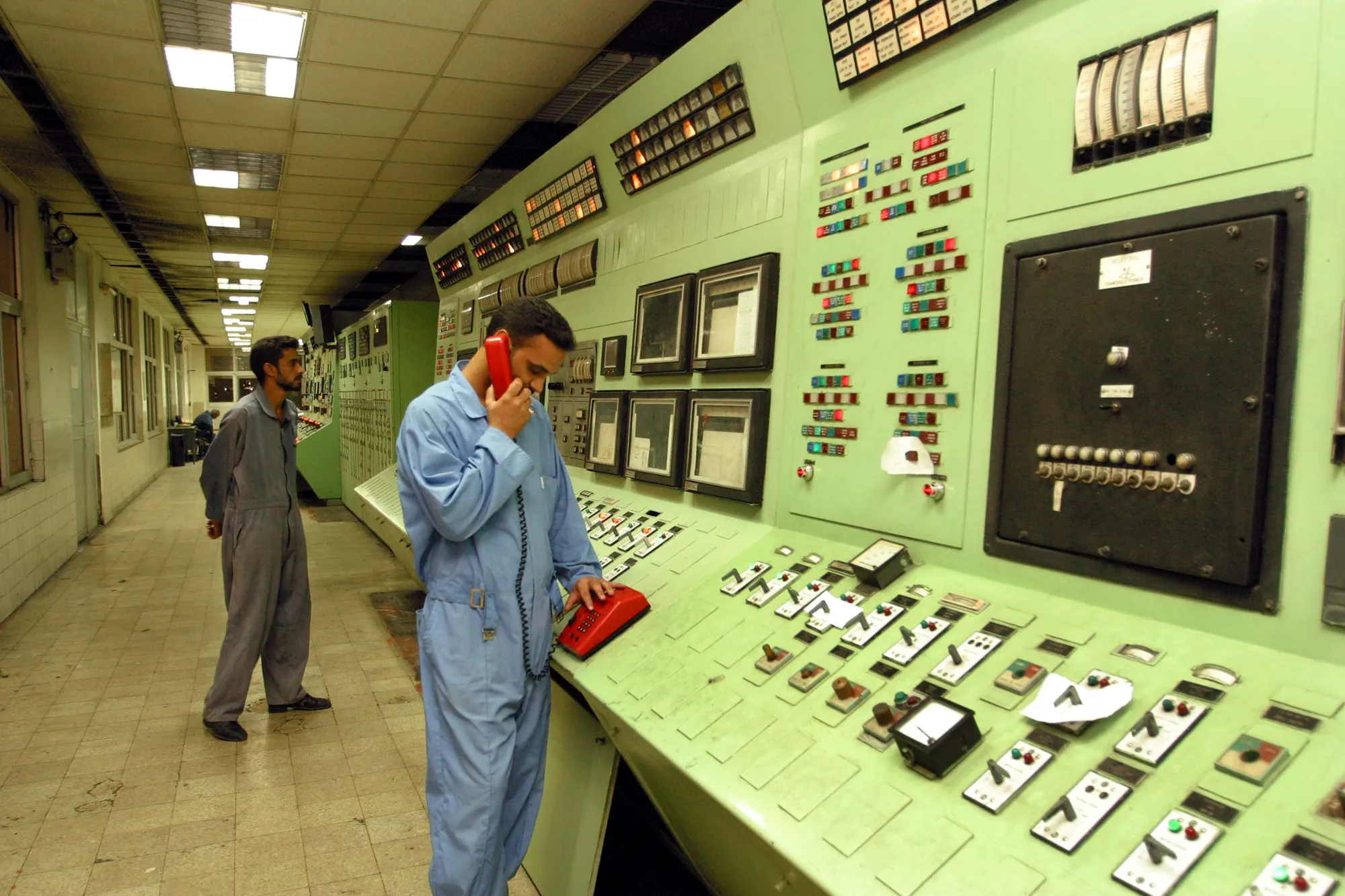
Engineers monitoring the control panels of a power station in Baghdad

Desks you will sit at

  • Facility preparerRawa Aziz
  • KRG sector reviewerDilan Omar
  • KRG regional approverHana Rasul
  • National inventory reviewerNoor Salim
  • Independent verifierSamira Haddad
  • National Article 6 authorityFaris Nouri

Every person, facility and figure in the demo is an example.

  1. Scenario 1: Happy path

    A KRG power station’s monthly report goes from data entry through quality checks, regional approval and transmission to national acceptance.

  2. Scenario 2: Correction

    The national reviewer queries a figure. The region issues a revised version, and the original stays on record, marked as superseded.

  3. Scenario 3: Idempotent resend

    The same package is sent twice. The Hub recognises it and acknowledges a duplicate instead of counting it again.

  4. Scenario 4: Offline connector

    The link between nodes fails. Transmission retries on its own, with a manual export fallback that keeps the audit trail intact.

  5. Scenario 5: Article 6 boundary

    A regional user tries to authorise an Article 6 transfer. The system refuses and explains why only the national authority can.

  6. Scenario 6: Independent assurance

    A verifier reviews the evidence, raises a finding and issues a qualified opinion, separately from the approval chain.

Each visitor works in a private sandbox. Nothing you do affects anyone else, and you can reset it at any time.

Sign in to start a scenario

From readiness to national scale

The three plans are stages of one platform, not three competing systems. Each stage keeps the same governance, data model and audit trail and builds on them, and each must pass an agreed gate before the next begins.

Plan 1 ReadinessMonths 0–18

Plan 2 Targeted upgradesMonths 12–36

Plan 3 Selective scaleMonths 24–60

Indicative horizon in months. Horizons overlap on purpose and are indicative only. Proposed design, not adopted.

Plan 1: Readiness

Governance, common templates, a controlled method and factor library and a secure portal, using the data Iraq already has. It needs no AI and no plant integration.

  • Web forms, controlled uploads and automatic quality checks
  • KRG Regional Node with signed exchange to the National Hub
  • Pilot in two sectors before national commissioning

Plan 2: Targeted upgrades

Better data where it matters most: key categories and major emitters, beginning with those that pass the selection gate.

  • Country-specific methods and formal uncertainty analysis
  • Targeted metering and secure sector data links
  • Routine independent verification

Plan 3: Selective scale

Advanced measurement and automation, only where the value justifies the cost and never as a requirement for every sector.

  • Continuous measurement at selected material points
  • Satellite methane data to corroborate, never to replace
  • High availability and governed analytics

Who is behind it

Iraq Digital MRV was designed and built by an independent team of climate-transparency and software specialists, as a proposal for discussion with Iraqi federal and Kurdistan Region authorities and their international partners.

What it is

  • A working model of a proposed national MRV system that you can operate end to end.
  • A way to judge whether the design fits Iraq’s institutions before anything is procured.
  • A private sandbox for each visitor, with example data that can be reset at any time.

What it is not

  • Not an official government system, and not operated or endorsed by any ministry or regional authority.
  • Not real data. Facilities, people, figures and emission factors are all invented.
  • Not a carbon registry. No real credits, ITMOs or corresponding adjustments exist here.

Questions we are often asked

Is this an official government system?

No. It is an independent demonstration of a proposed design. It is not operated, adopted or endorsed by the federal government, the Kurdistan Regional Government or any ministry.

Is any of the data real?

No. Every facility, person, figure and emission factor is an example. Factors are labelled DEMO and must not be used for real reporting.

How do I get access?

Access is by invitation. If you work on climate transparency in Iraq, or with a partner organisation, ask the presenting team for an account.

Does the Kurdistan Region lose control of its data?

No. The KRG Regional Node reviews and approves its own facilities and keeps the regional source record and evidence. The National Hub can query or reject a package, but it never edits regional data.

How is double counting prevented?

Each facility and period has one canonical national record. Packages carry a content hash and an idempotency key, so a resent package is recognised and acknowledged without being counted again.

Does it issue carbon credits?

No. It shows how an Article 6 workflow would sit beside the inventory, with sovereign decisions reserved to the national authority. Units in the demo are simulated serials, not credits.

How does it help exporters facing CBAM?

It keeps product-level emissions for goods such as cement as a separate ledger, with its own boundary, so exporters can document embedded emissions without mixing them into the national inventory or Article 6 accounts.

Does it need AI or new meters to work?

No. The foundation runs on web forms, controlled uploads and deterministic checks. Metering, system links and analytics are later upgrades, each behind its own decision gate, and analytics only ever advise.

Does it produce official UNFCCC submissions?

No. It prepares illustrative inventory and transparency outputs to show how accepted records would feed them. Official submissions remain the responsibility of the national authorities.

See a national record being built

Sign in and run the first scenario: an example KRG power station’s monthly report travels from the meter to the national total in a few minutes.

Sign in to the demo

No sign-up. Accounts are issued by invitation.